The Same Product And Company, The Different Quality and Service!
The global demand for durable perimeter security and industrial filtration has shifted toward materials that balance structural rigidity with long-term atmospheric resistance. In this context, selecting a qualified galvanized welded wire mesh manufacturer becomes a critical decision for engineers tasked with safeguarding infrastructure against oxidation and mechanical failure in harsh environments.
The primary challenge lies in the inconsistency of zinc coating thickness and weld integrity across different production standards. When the galvanization process is uneven or the welding points are brittle, the entire system becomes susceptible to premature corrosion, which increases maintenance costs and compromises safety protocols in civil engineering and agricultural projects.
This technical analysis examines the engineering requirements for high-performance wire mesh, the critical role of material specifications, and how to evaluate a galvanized welded wire mesh manufacturer based on production rigor and material traceability.


The efficacy of galvanized mesh depends on the chemical bond between the low-carbon steel substrate and the zinc layer. By utilizing high-quality low-carbon steel wire, manufacturers can ensure that the mesh retains a degree of flexibility while maintaining high tensile strength, which is essential for preventing deformation under external pressure.
The galvanization process acts as a sacrificial anode, where the zinc layer corrodes preferentially to protect the underlying steel. For a professional galvanized welded wire mesh manufacturer, maintaining a uniform coating thickness is paramount to preventing "pitting" corrosion, which can lead to rapid structural failure in marine or industrial zones.
Selecting the correct mesh opening and wire diameter is not merely a matter of cost, but of engineering utility. For instance, a mesh opening of 20x20mm with a wire diameter of 1.2-2.1mm is optimized for light-duty security and animal enclosures, whereas larger openings like 100x100mm with diameters up to 4.0mm are designed for heavy-duty industrial barriers and civil engineering supports.
The gauge of the wire (BWG) directly influences the load-bearing capacity and the tension the mesh can withstand during installation. A mismatch between the wire gauge and the intended application—such as using a light-gauge mesh for a gabion wall—will lead to structural sagging and potential collapse under the weight of rock fill.
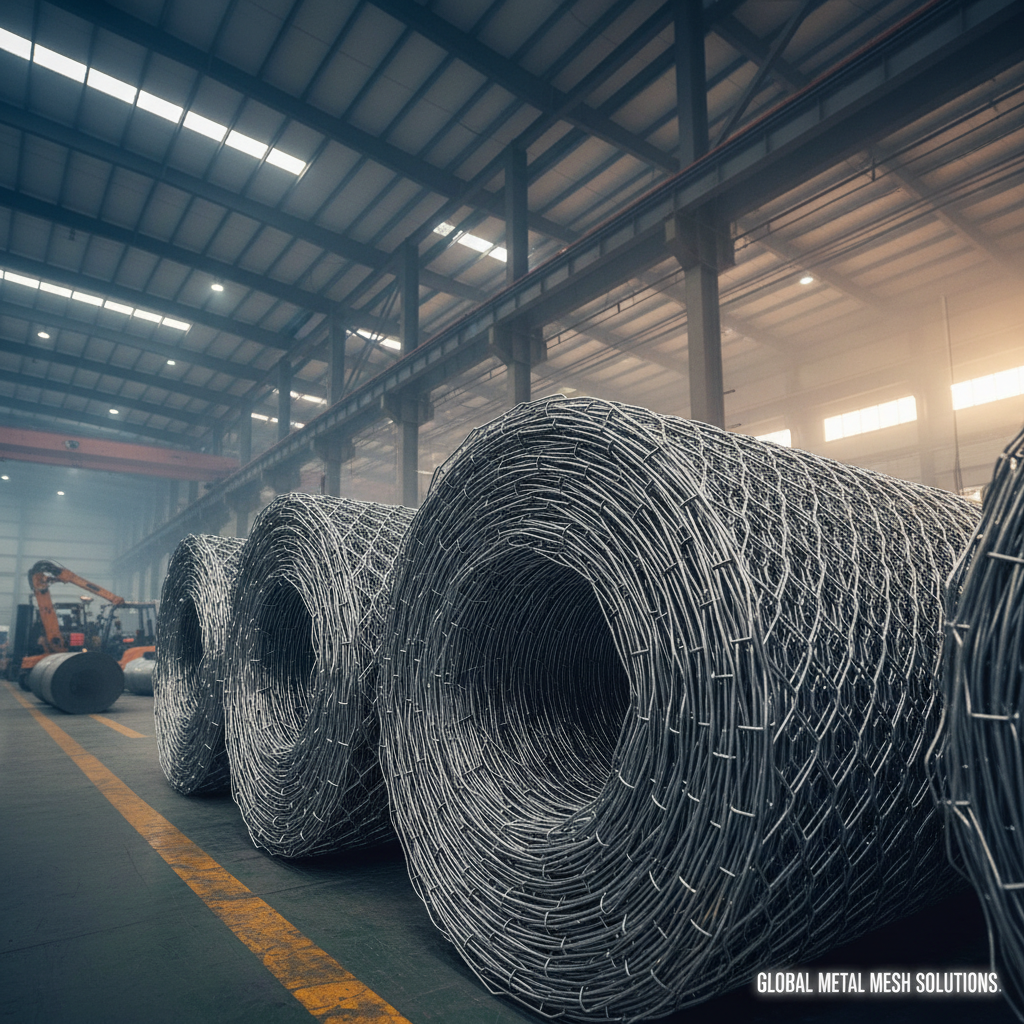
Furthermore, the length of the mesh rolls (ranging from 10m to 500m) must be aligned with the site's deployment scale to minimize waste and weld joints, as every additional joint represents a potential point of structural weakness and corrosion initiation.
The intersection of wires in welded mesh is the most critical point of the entire structure. Mechanical stability is determined by the fusion depth of the weld and the absence of slag or burn-through, which can compromise the zinc coating at the contact point.
The result of a stable welding process is a mesh that remains uniform and smooth, ensuring that the product is not only visually elegant but also resistant to deformation by external forces, making it ideal for safety protection and isolation in high-traffic industrial areas.
Evaluating the quality of galvanized mesh requires a normalized approach to assess various operational factors. Since real-world data varies by environment, engineering ratings are used to compare different configurations across key performance indicators.
The following assessment highlights the relative performance of various mesh configurations based on an engineering rating scale (1-10), focusing on their ability to resist environmental stress and mechanical load.
In typical deployment scenarios, galvanized welded mesh is utilized across a spectrum of applications, from agricultural enclosures for poultry and zoo exhibits to critical civil engineering works such as seawall protection and bridge supports. The flexibility of these products allows them to be adjusted on-site to meet the specific geometric requirements of the terrain.
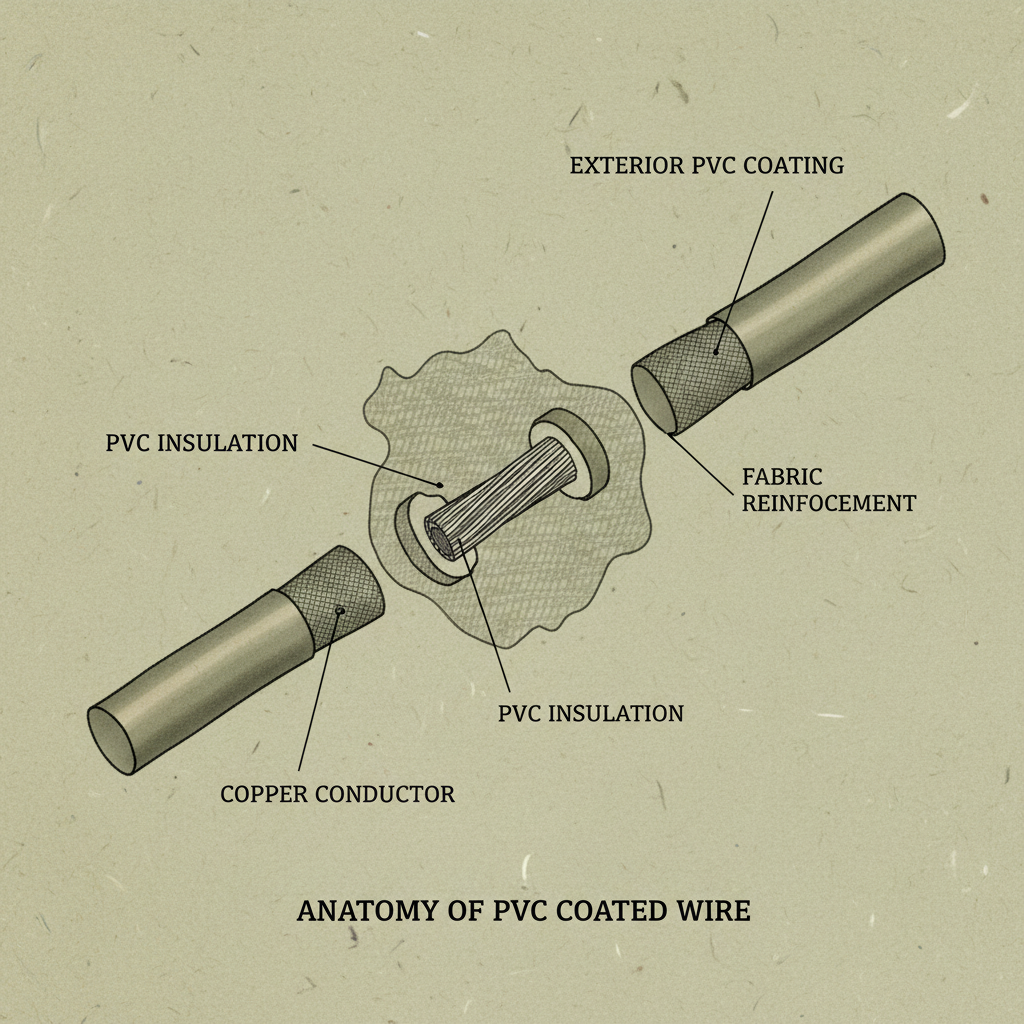
For high-corrosion environments, such as marine fishing fences or river course slope stabilization, the transition to PVC-coated galvanized mesh is often recommended. The PVC layer provides an additional chemical barrier that prevents salt-water infiltration, significantly extending the service life of the installation compared to standard galvanized coatings.
The industry is moving toward higher-precision automation in the welding phase to eliminate human error and ensure 100% consistency in joint strength. Future advancements are likely to focus on alloy-zinc coatings, which incorporate small amounts of aluminum and magnesium to create a more stable passive layer, further enhancing the corrosion resistance in acidic industrial atmospheres.
Sustainability is also driving a shift toward more efficient raw material screening and waste reduction in the galvanization baths. The implementation of 5S screening standards for raw material suppliers allows manufacturers to track the metallurgy of the wire from the mill to the finished mesh roll, ensuring a higher baseline of quality.
Additionally, the integration of smart monitoring during production—where process parameters are recorded in real-time—is becoming a standard requirement for procurement in the B2B sector, as it provides the necessary documentation for quality audits and safety certifications.
When evaluating a potential partner, buyers should move beyond the price per roll and analyze the manufacturer's quality control infrastructure. This includes verifying their warehouse storage conditions to prevent pre-delivery oxidation and their sampling frequency during the production run.
A robust selection matrix should consider the trade-off between wire diameter and mesh opening, as well as the specific coating method (electro-galvanized vs. hot-dipped). Hot-dipped coatings typically offer superior longevity for outdoor exposure, while electro-galvanized finishes are suitable for interior decoration and light-duty use.
The following matrix provides a framework for matching mesh configurations to specific industrial requirements based on common engineering profiles.
| Configuration Type | Wire Diameter | Corrosion Resistance | Recommended Use Case |
|---|---|---|---|
| Basic Profile | 1.2 - 2.1 mm | Standard | Residential Fencing / Animal Pens |
| Standard Duty | 2.1 - 3.4 mm | Enhanced | Agricultural / Light Industrial |
| High-Tension | 3.4 - 4.0 mm | High | Security Perimeter / Sports Venues |
| Heavy-Industrial | 4.0 mm + | Maximum | Warehouse / Tool Room Reinforcement |
| Engineering-Grade | Variable | Specialized | Gabion Mesh / Flood Control |
| Environmental-Spec | Variable | Ultra-High | Seawalls / River Course Support |
The choice depends on the expected mechanical load and the security level required. For light barriers, 1.2-2.1mm is sufficient. However, for industrial perimeters where the fence must resist physical impact or support heavy climbing, diameters between 3.4mm and 4.0mm are necessary. Buyers should calculate the maximum expected lateral force and select a wire gauge that prevents permanent deformation under that load.
Hot-dipped galvanization involves immersing the steel in molten zinc, creating a thick, durable layer ideal for outdoor and harsh environments. Electro-galvanization uses an electrical current to apply a thinner, smoother zinc layer, which is more aesthetically pleasing and cost-effective but offers significantly less corrosion resistance. For any outdoor civil engineering project, hot-dipped is the industry standard.
Yes, when configured as gabion mesh. By forming the wire mesh into box-shaped containers and filling them with rocks, it creates a permeable, flexible structure that prevents slope erosion and stabilizes river courses. In these applications, a heavier wire gauge and high-quality galvanization are mandatory to prevent the structure from failing due to constant contact with moist soil and rock abrasion.
Inspect the intersection points for "burn-through" (where the wire has melted too much) or "cold joints" (where the wires are touching but not fused). A simple tension test—applying moderate force to a mesh section—should reveal any brittle welds that snap easily. Additionally, check for areas where the zinc coating has flaked off at the weld point, which indicates overheating during production.
PVC coating does not increase the structural strength of the steel, but it protects the galvanization layer from chemical attack and UV degradation. This prevents the onset of corrosion, meaning the structural integrity is preserved for a longer period in aggressive environments. It also adds a layer of flexibility and aesthetic customization for sports venues and urban green belts.
Lead times are influenced by the raw material screening process and the specific production schedule. Professional manufacturers typically evaluate the order and formulate detailed quality indicators before production. For large rolls (up to 500m) or custom wire gauges, buyers should account for the time required for the galvanization bath cycles and final quality inspection signatures to ensure the batch meets all specifications.
The longevity of an industrial mesh system is directly proportional to the precision of its material selection and the consistency of its welding process. By prioritizing a galvanized welded wire mesh manufacturer that implements rigorous raw material screening and real-time process monitoring, engineers can significantly reduce the risk of premature structural failure and environmental degradation.
Ultimately, the balance between wire gauge, coating thickness, and weld integrity determines the actual operational life of the installation. For those seeking reliable, high-tension security and isolation solutions, exploring specifications from an established galvanized welded wire mesh manufacturer ensures that the final deployment meets both safety standards and budgetary efficiency.