Understanding the Versatility of the Common Nail 5 5 for Various Applications
Understanding Common Nail 5 5: A Comprehensive Guide
The common nail 5 5 is a fundamental fastening solution used across various industries, from construction and woodworking to DIY projects. Its simplicity and reliability make it a staple in many toolboxes. This article provides an in-depth look at this essential fastener, covering its specifications, applications, materials, and how to select the right nail for your needs. Understanding the nuances of the common nail 5 5 ensures project integrity and longevity. Choosing the right nail for the job can make all the difference in the final product's strength and appearance.
What Defines a Common Nail 5 5?
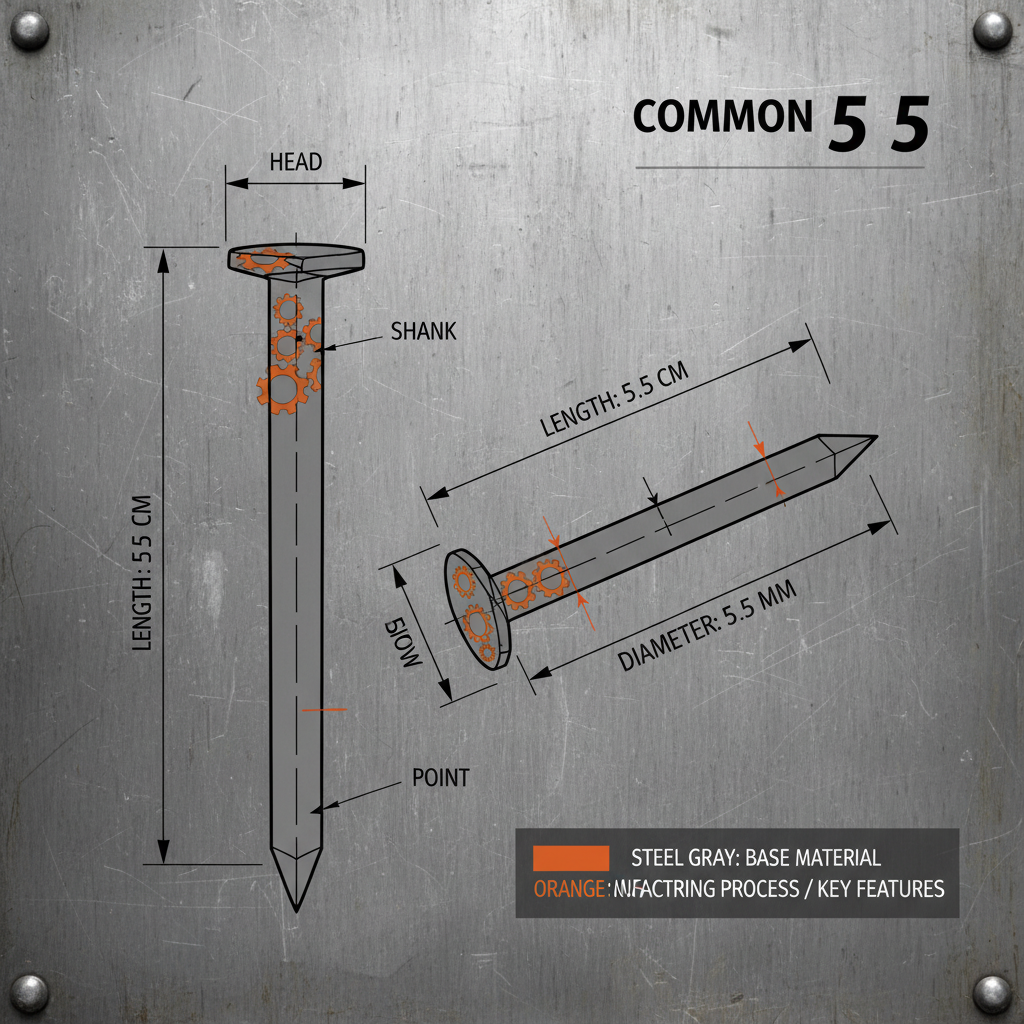
The term "common nail 5 5" refers to a specific type and size of nail. 'Common' designates its general-purpose design, suitable for a broad range of applications. The '5 5' indicates the nail's dimensions: a diameter of 5 gauge (approximately 0.157 inches) and a length of 5 inches. This combination results in a robust nail capable of providing strong holding power in various materials. These nails typically feature a flat head and a smooth shank. They are designed to be driven directly into wood using a hammer. For professionals and DIY enthusiasts alike, the common nail 5 5 offers a reliable fastening option.
Materials Used in Common Nail 5 5 Production
Common nails are predominantly manufactured from low-carbon steel. This material provides the necessary strength and ductility for driving and holding. However, variations exist. Some nails are galvanized with a zinc coating to enhance corrosion resistance, making them suitable for outdoor applications or treated lumber. Stainless steel nails are also available, offering superior resistance to rust and corrosion, but at a higher cost. The choice of material depends on the intended use and environmental conditions. Fivestar Metals provides high-quality common nails in various materials to meet diverse project requirements.
Key Takeaway: The material composition directly impacts a nail's durability and suitability for specific environments. Galvanized and stainless steel options offer enhanced corrosion resistance.
Applications of the Common Nail 5 5
The common nail 5 5 is exceptionally versatile. Common applications include framing, sheathing, fencing, and general construction. It’s also widely used in woodworking projects, such as building furniture, cabinets, and crates. The 5-inch length provides sufficient penetration for joining thicker pieces of lumber. Due to its straightforward design, it's a favorite among both professionals and homeowners. Properly driven, these nails offer a secure and lasting hold. They are often used in situations where a strong, but not necessarily aesthetically pleasing, connection is required.
Common Applications:
• Framing and structural work
• Sheathing and siding
• Fencing construction
• General woodworking and repairs
Common Nail 5 5 vs. Other Nail Types: A Comparative Overview
While the common nail 5 5 is a workhorse, it’s important to understand its differences from other nail types. Box nails have a thinner shank, making them easier to drive but less strong. Finishing nails have a smaller head, designed to be less visible, but offer reduced holding power. Roofing nails have a large, flat head and are specifically designed for attaching roofing materials. Each nail type is optimized for a particular application. Selecting the right nail will significantly impact the quality and longevity of your project.
Ensuring Safe and Effective Use of Common Nails
Safety should always be a priority when working with nails. Always wear safety glasses to protect your eyes from flying debris. Use a hammer with a comfortable grip and swing with controlled force. Ensure the nail is held securely before striking. When working with hardwoods, consider pre-drilling pilot holes to prevent splitting. Proper technique will not only ensure a secure fastening but also minimize the risk of injury. Inspect the nail after driving to confirm it is fully seated and secure.
Conclusion: The Enduring Value of the Common Nail 5 5
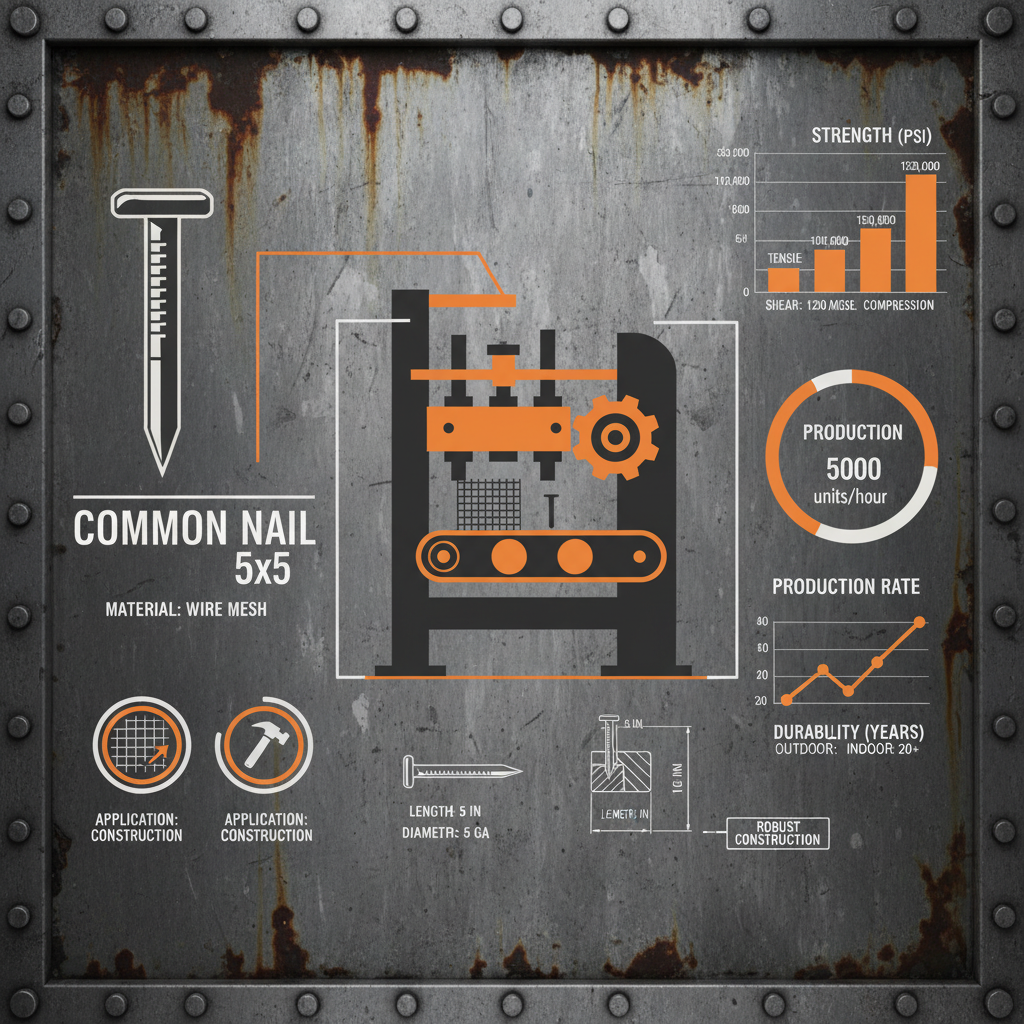
The common nail 5 5 remains an indispensable tool for countless applications. Its affordability, reliability, and versatility make it a staple in both professional and DIY settings. Understanding its properties and appropriate uses ensures optimal results and safe operation. From framing to finish work, this simple fastener continues to play a critical role in building and creating.
Frequently Asked Questions (FAQs)
What wood types are best suited for common nails?
Common nails work well with softwood like pine, fir, and spruce. However, they can be used with hardwoods like oak and maple, but pre-drilling pilot holes is highly recommended to prevent the wood from splitting. The density of the wood significantly affects the ease of driving and the holding power of the nail. Choosing a galvanized nail is also a good idea for outdoor applications or when using pressure-treated lumber, as these materials can corrode standard steel nails.
How should I store common nails to prevent rust?
The best way to prevent rust is to store nails in a dry environment. A sealed container or bag will protect them from moisture. Adding a desiccant packet to the container can further absorb any residual moisture. For galvanized nails, proper storage is less critical, but still recommended to prolong their lifespan. Avoid storing nails in damp basements or sheds.
Can common nails be removed and reused?
While it's possible to remove common nails, reusing them is generally not recommended. Each time a nail is driven and removed, it loses some of its strength and the galvanized coating (if present) can be damaged. Reusing nails can compromise the integrity of the connection and increase the risk of failure. It’s always best to use fresh nails for each project to ensure a secure and reliable fastening.
What is the proper hammering technique for common nails?
Start by holding the nail firmly in place with your fingers. Use a smooth, controlled swing to drive the nail head straight. Once the nail is partially driven, you can remove your fingers and continue hammering until the head is flush with the surface. Avoid hitting the nail at an angle, as this can bend it over or cause the wood to split. Always wear safety glasses to protect your eyes from flying debris.


-
Canton Fair 2026-4 in Guangzhou,China
NewsApr.24,2027
-
High Quality Common Nails 1212 for Construction Projects
NewsApr.16,2026
-
The 139th Canton Fair
NewsApr.14,2026
-
Guide to Using Galvanised Common Round Nails for Durable Construction
NewsApr.09,2026
-
Comprehensive Guide to Flat Head Common Nails for Construction Projects
NewsApr.07,2026
-
Understanding the Versatility of the Common Nail 5 5 for Various Applications
NewsApr.04,2026