Understanding Common Nail Panel Pins for Woodworking and Craft Projects
Understanding Common Nail Panel Pins: A Comprehensive Guide
When it comes to woodworking, upholstery, and crafts, selecting the right fastener is crucial for achieving a professional and secure finish. Common nail panel pins are a versatile choice, offering a discreet yet robust solution for a variety of applications. This article will explore the characteristics, uses, advantages, and considerations for choosing the right panel pins for your project. We’ll delve into the specifics, helping you understand why Fivestar-Metals is a trusted supplier for high-quality panel pins.

What are Common Nail Panel Pins?
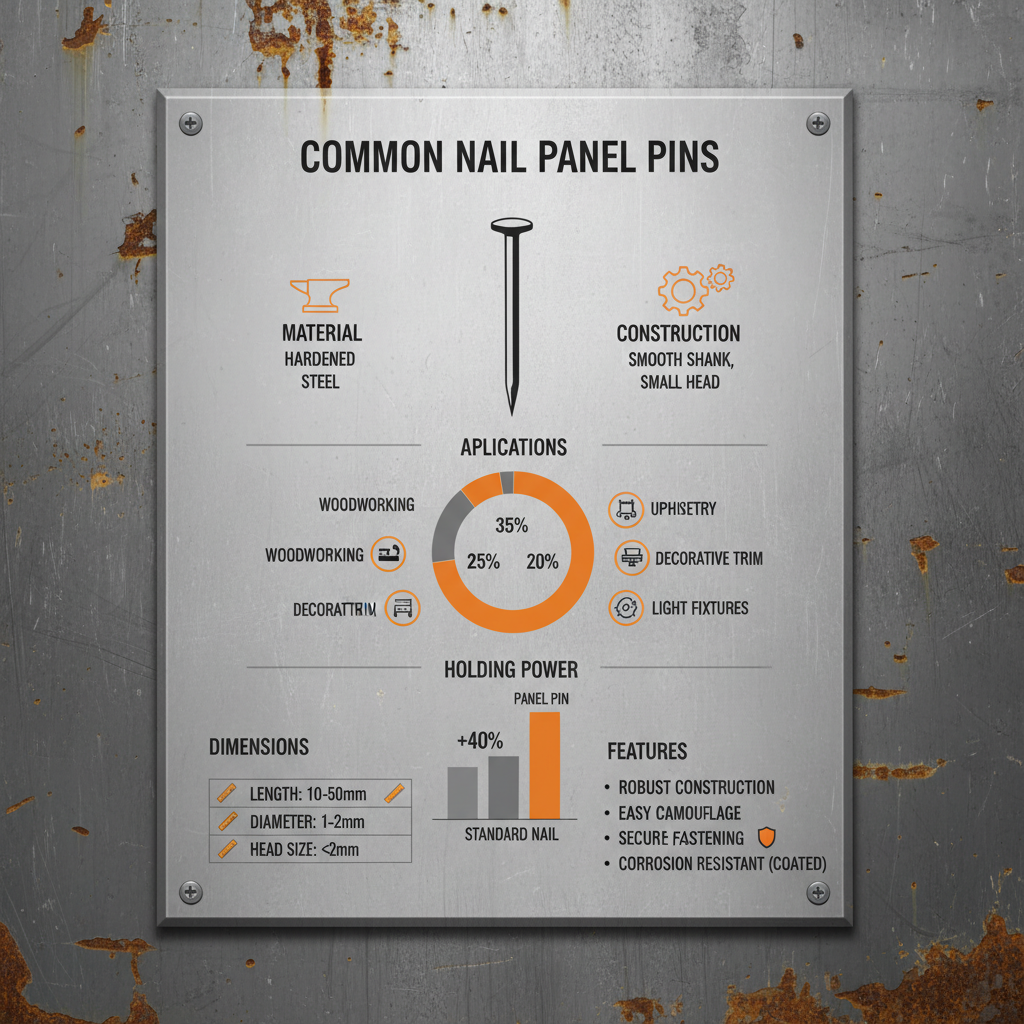
Common nail panel pins are small, slender nails with a very small head, often almost flush with the surface. This minimal head size is their defining characteristic, making them ideal for applications where you don't want the fastener to be visually prominent. They are typically made of steel wire, and their length ranges from approximately 1/2 inch to 1 1/2 inches. The thin shaft allows for easy insertion into softwoods and other pliable materials without causing splitting. They are commonly used in applications like holding picture frame molding, attaching thin wood panels, and securing fabric to wood frames.
Key Highlights: Small head size, slender shaft, ideal for delicate materials, and minimal visual impact.
Common Nail Panel Pins vs. Other Fasteners
Panel pins differ significantly from other common fasteners like brad nails, finishing nails, or even staples. Brad nails, while small, have a slightly larger head and are often used with a nail gun. Finishing nails are larger and designed for a more robust hold, making them visible. Staples are effective for securing fabric but aren't ideal for delicate wood-to-wood applications. The key advantage of panel pins is their discreet nature and ease of use – they can often be inserted by hand, especially in softer woods.
Comparison of Fasteners:
• Panel Pins: Very small head, hand-insertable, discreet.
• Brad Nails: Small head, usually require a nail gun, moderate holding power.
• Finishing Nails: Larger head, require a nail gun, strong holding power, more visible.
• Staples: Best for fabric, not ideal for delicate wood.
Applications for Common Nail Panel Pins
The versatility of panel pins makes them a go-to choice for numerous projects. They're extensively used in picture framing to hold the backing board and molding in place. Upholsterers rely on them to secure fabric to wooden frames, creating a neat and professional finish. Craft projects, model making, and even assembling small wooden boxes all benefit from the discreet holding power of these pins. They're also useful for temporarily holding pieces together while glue dries.
Choosing the Right Panel Pin: Length and Material
Selecting the appropriate length and material for your panel pins is critical. The length should be at least twice the thickness of the materials being joined to ensure a secure hold. For example, if you’re joining two pieces of 1/2-inch wood, a 1-inch panel pin is a good choice. Most panel pins are steel, providing good strength and affordability. However, for projects requiring corrosion resistance, brass or stainless steel panel pins are available. Fivestar-Metals offers a wide variety of materials to fit every need.
Where to Buy High-Quality Panel Pins
When sourcing panel pins, quality is paramount. Poorly manufactured pins can bend easily, lack holding power, or even damage the materials you’re working with. Fivestar-Metals is a reputable supplier known for its consistently high-quality fasteners. We offer a wide selection of panel pins in various lengths and materials, ensuring you find the perfect solution for your project. Our competitive pricing and reliable shipping make us a trusted partner for professionals and hobbyists alike.
Conclusion: The Essential Fastener for Delicate Work
Common nail panel pins are an invaluable tool for anyone working with delicate materials. Their discreet size, ease of use, and reliable holding power make them ideal for a wide range of applications. By choosing high-quality panel pins from a trusted supplier like Fivestar-Metals, you can ensure your projects are finished to a professional standard.
Frequently Asked Questions (FAQs)
Can panel pins be removed?
Yes, panel pins can be removed, but it requires care to avoid damaging the surrounding material. A small nail puller or pliers with a padded grip are the most effective tools. Gently rock the pin back and forth while pulling straight out. If the pin is deeply embedded, try tapping the head lightly with a hammer to loosen it. Taking your time and using a slow, steady motion will minimize the risk of splintering or cracking the wood. Avoid twisting the pin, as this can cause damage.
What type of wood are panel pins best suited for?
Panel pins are ideal for softer woods like pine, fir, and cedar, as they can be easily inserted without causing splitting. They can also be used in hardwoods, but pre-drilling a small pilot hole is recommended to prevent the wood from cracking, especially when working close to the edge. The thinner the wood, the more easily panel pins can be used without pre-drilling.
Are panel pins suitable for outdoor use?
Standard steel panel pins are not ideal for outdoor use as they are susceptible to rust and corrosion. If you need panel pins for outdoor projects, it's best to choose brass or stainless steel pins, which offer excellent corrosion resistance. These materials will withstand exposure to the elements and maintain their strength and integrity over time.
What is the best way to store panel pins?
To prevent rust and keep panel pins in good condition, store them in a dry environment. A plastic container or a sealed bag is ideal. Adding a silica gel packet to the container can help absorb any moisture and further protect the pins. Avoid storing them in humid areas or directly on the floor.


-
Canton Fair 2026-4 in Guangzhou,China
NewsApr.24,2027
-
High Quality Common Nails 1212 for Construction Projects
NewsApr.16,2026
-
The 139th Canton Fair
NewsApr.14,2026
-
Guide to Using Galvanised Common Round Nails for Durable Construction
NewsApr.09,2026
-
Comprehensive Guide to Flat Head Common Nails for Construction Projects
NewsApr.07,2026
-
Understanding the Versatility of the Common Nail 5 5 for Various Applications
NewsApr.04,2026