Comprehensive Guide to 16d Common Nails for Construction and Woodworking
Understanding 16d Common Nails: A Comprehensive Guide
16d common nails are a staple in construction and woodworking, renowned for their versatility and holding power. These nails, identified by the “d” which indicates penny size (a historical measurement), offer a robust fastening solution for a wide array of projects. From framing to general carpentry, understanding the characteristics of 16d common nails is crucial for achieving strong, durable results. We'll delve into their specifications, applications, and provide guidance on choosing the right nails for your needs, all with a focus on quality and performance.

What Exactly Are 16d Common Nails?
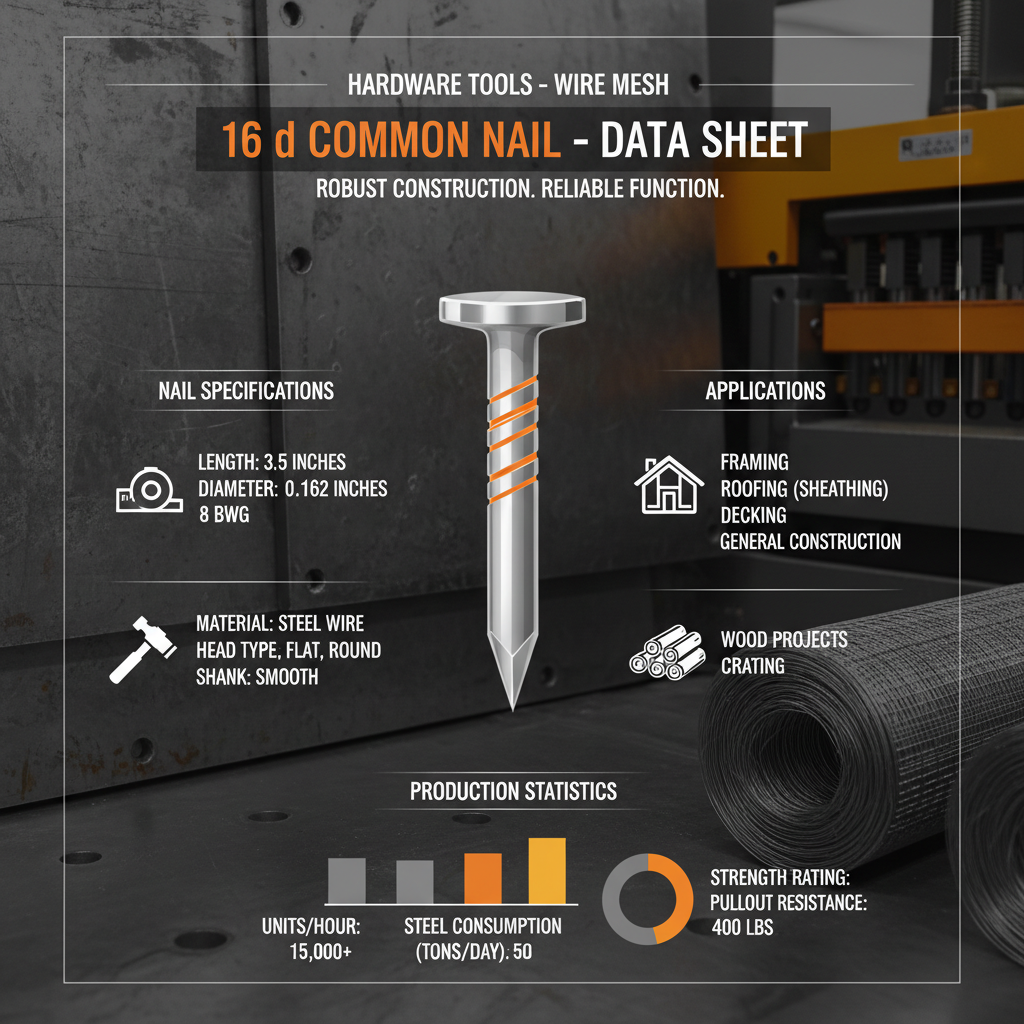
The term "16d" refers to the penny size of the nail, which historically correlated to the cost of 16 nails per pound. Today, it's a standard unit of measurement. A 16d common nail is approximately 3 ½ inches (89mm) long and has a shank diameter of 0.120 inches (3.05mm). "Common" nails are characterized by a thick shank and a broad, flat head. This design provides excellent holding power, especially in softwood applications. They are typically made from carbon steel, although other materials like galvanized steel are available for increased corrosion resistance. Choosing the right material depends on the environment and the intended use of the project.
Key Highlights: 3 ½ inches long, 0.120-inch shank diameter, thick shank, broad flat head, typically made of carbon or galvanized steel.
Common Applications for 16d Nails
16d common nails are exceptionally versatile. They are predominantly used in framing, where their length and thickness provide secure connections between studs, joists, and rafters. They are also commonly employed in fencing, barn construction, and general carpentry projects. Their robust construction makes them suitable for projects requiring significant strength and durability. Beyond structural work, they find use in projects like attaching siding, building crates, and even some types of furniture construction where a rustic aesthetic is desired. When selecting nails, consider the wood type and project requirements.
Application Benefits:
• Excellent holding power in softwood
• Suitable for structural applications
• Versatile for a wide range of carpentry projects
16d Common Nails vs. Other Nail Sizes
Choosing the right nail size is paramount for project success. While 16d nails are excellent for many applications, they aren't always the best choice. Smaller nails, like 8d or 10d, are suitable for lighter-duty tasks, such as trim work or attaching thin materials. Larger nails, such as 20d or 30d, are used for heavier construction requiring even greater holding power. The optimal size depends on the thickness of the materials being joined and the load they will bear. Using a nail that's too small can compromise the structural integrity, while using one that's too large can split the wood.
Material Options and Corrosion Resistance
16d common nails are most commonly made from carbon steel, offering a good balance of strength and cost. However, for outdoor projects or environments with high humidity, galvanized nails are highly recommended. Galvanization is a process that coats the steel with a layer of zinc, providing excellent corrosion resistance. Stainless steel nails are another option for extreme corrosion resistance, but they are significantly more expensive. Consider the longevity of your project when deciding on the appropriate material.
Where to Source High-Quality 16d Common Nails
Choosing a reputable supplier is essential for ensuring you receive high-quality 16d common nails that meet industry standards. Fivestar Metals provides a comprehensive selection of nails, including 16d common nails in various materials and finishes. We prioritize quality control and offer competitive pricing, making us a trusted partner for construction professionals and DIY enthusiasts alike. Explore our extensive inventory to find the perfect nails for your next project.
Conclusion: The Power of the Right Nail
Selecting the right nail, like the versatile 16d common nail, is a crucial component of any successful construction or carpentry project. Understanding its specifications, applications, and material options allows you to make informed decisions that ensure structural integrity and lasting durability. For reliable supply and quality assurance, explore the selection at Fivestar Metals.
Frequently Asked Questions (FAQs)
What is the difference between a common nail and a box nail?
Common nails, like the 16d variety, have a thick shank and broad head, providing strong holding power. Box nails, on the other hand, have a thinner shank and a smaller head. This makes them less likely to split the wood, making them ideal for softer woods or when a more concealed nail head is desired. Box nails are generally used for interior trim work, while common nails are better suited for structural applications where strength is paramount. A 16d common nail provides substantially more holding power than a comparably sized box nail.
How do I prevent nails from bending over when hammering?
Nail bending typically occurs when hammering into hard wood or at an angle. To minimize bending, ensure you are using a nail appropriate for the wood's hardness. Using a nail set to drive the nail head just below the surface can also prevent bending. If the wood is particularly hard, pre-drilling a pilot hole slightly smaller than the nail's shank diameter can help guide the nail straight. Additionally, ensure your hammer is in good condition and striking the nail head squarely.
Are 16d common nails suitable for pressure-treated lumber?
While you can technically use 16d common nails with pressure-treated lumber, it's strongly recommended to use hot-dipped galvanized nails instead. The chemicals used to treat pressure-treated lumber can corrode standard carbon steel nails over time, leading to weakening and potential failure. Hot-dipped galvanized nails offer superior corrosion resistance and will provide a much longer-lasting connection. Choosing the right nail for the application is critical for safety and durability.


-
Canton Fair 2026-4 in Guangzhou,China
NewsApr.24,2027
-
High Quality Common Nails 1212 for Construction Projects
NewsApr.16,2026
-
The 139th Canton Fair
NewsApr.14,2026
-
Guide to Using Galvanised Common Round Nails for Durable Construction
NewsApr.09,2026
-
Comprehensive Guide to Flat Head Common Nails for Construction Projects
NewsApr.07,2026
-
Understanding the Versatility of the Common Nail 5 5 for Various Applications
NewsApr.04,2026