Understanding Common Nails Q195 Q235 Steel Grades Applications and Comparison
Understanding Common Nails: Q195 vs. Q235 Steel Grades
When undertaking construction or woodworking projects, the choice of fasteners is crucial. Among the most commonly used are common nails. These simple yet essential fasteners come in varying steel grades, with Q195 and Q235 being prevalent options. Understanding the differences between these grades, particularly their mechanical properties and applications, is key to ensuring project integrity and safety. This article will delve into the nuances of Q195 and Q235 common nails, providing a comprehensive guide for builders, contractors, and DIY enthusiasts. Selecting the appropriate nail grade can significantly impact the strength and longevity of your structures.
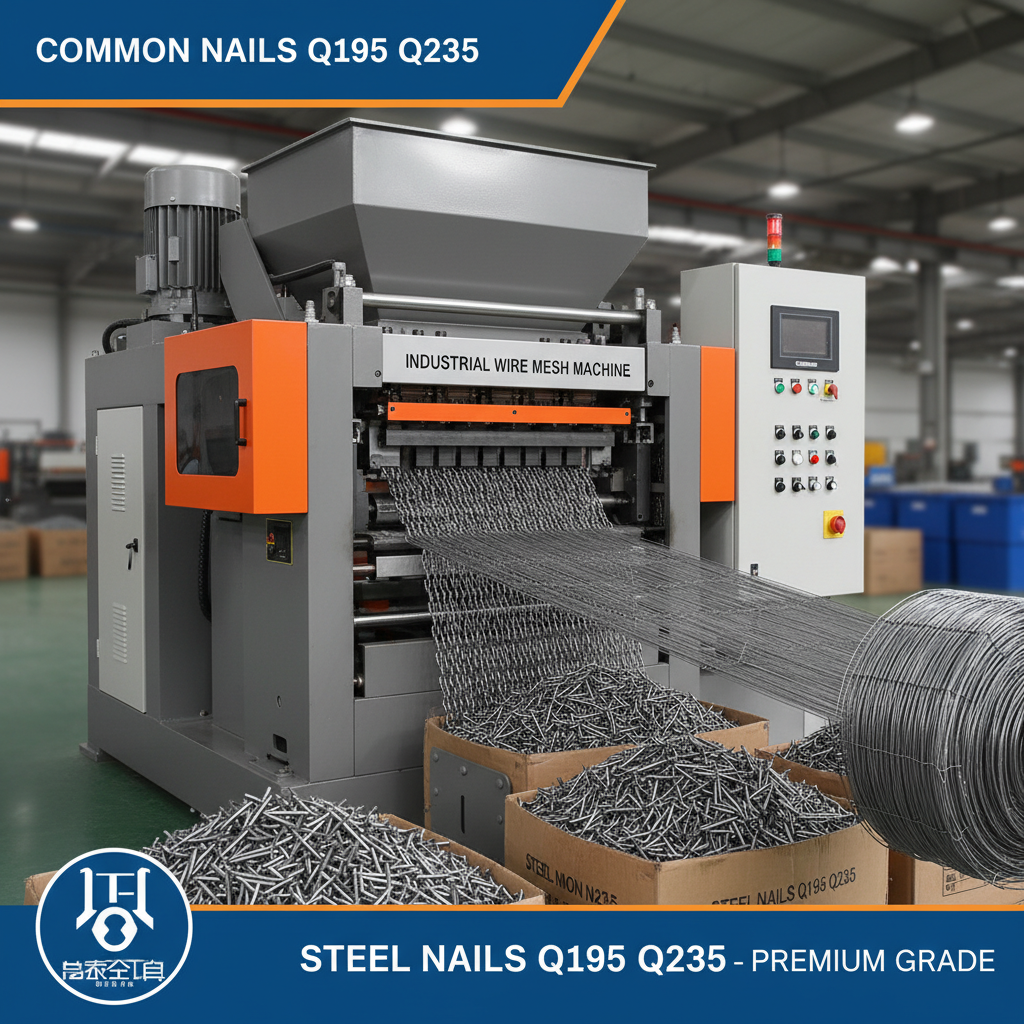
What are Q195 and Q235 Steel?
Q195 and Q235 are low carbon steel grades widely used in various applications, including nail manufacturing. The ‘Q’ designation indicates a mild steel, and the numbers represent the minimum tensile strength in MPa (Megapascals). Q195 steel has a minimum tensile strength of 195 MPa, while Q235 boasts a minimum of 235 MPa. This difference in tensile strength is a fundamental distinction, affecting the nail’s ability to resist bending and breaking under stress. Both grades exhibit good weldability, ductility, and formability, making them suitable for producing common nails. The choice between the two often depends on the specific demands of the project and the required load-bearing capacity.
Key Takeaway: Q235 steel has a higher tensile strength than Q195, meaning it can withstand greater stress before breaking. This makes it a preferable choice for projects requiring stronger and more durable nails.
Common Nails: Q195 vs. Q235 – A Detailed Comparison
The primary difference between common nails made from Q195 and Q235 steel lies in their mechanical properties. Q235 nails, with their higher tensile strength, offer superior resistance to bending and shear forces. This makes them ideal for applications involving harder woods or those requiring greater structural integrity. Q195 nails, while suitable for softer woods and lighter-duty tasks, may be more prone to bending under significant stress. Considering these differences is crucial for selecting the right nail for the job.
Key Differences Summarized:
• Tensile Strength: Q235 > Q195
• Bend Resistance: Q235 > Q195
• Wood Suitability: Q235 – Harder woods, Q195 – Softer woods
• Cost: Q235 generally slightly more expensive.
Applications of Q195 Common Nails
Q195 common nails are well-suited for a range of applications where high strength isn’t paramount. These include general carpentry tasks such as assembling wooden frames for lightweight projects, attaching trim and molding, and securing non-structural elements. They're commonly used in interior finishing work, packaging, and temporary construction. Due to their lower cost, Q195 nails can be a cost-effective option for projects where the load-bearing requirements are minimal.
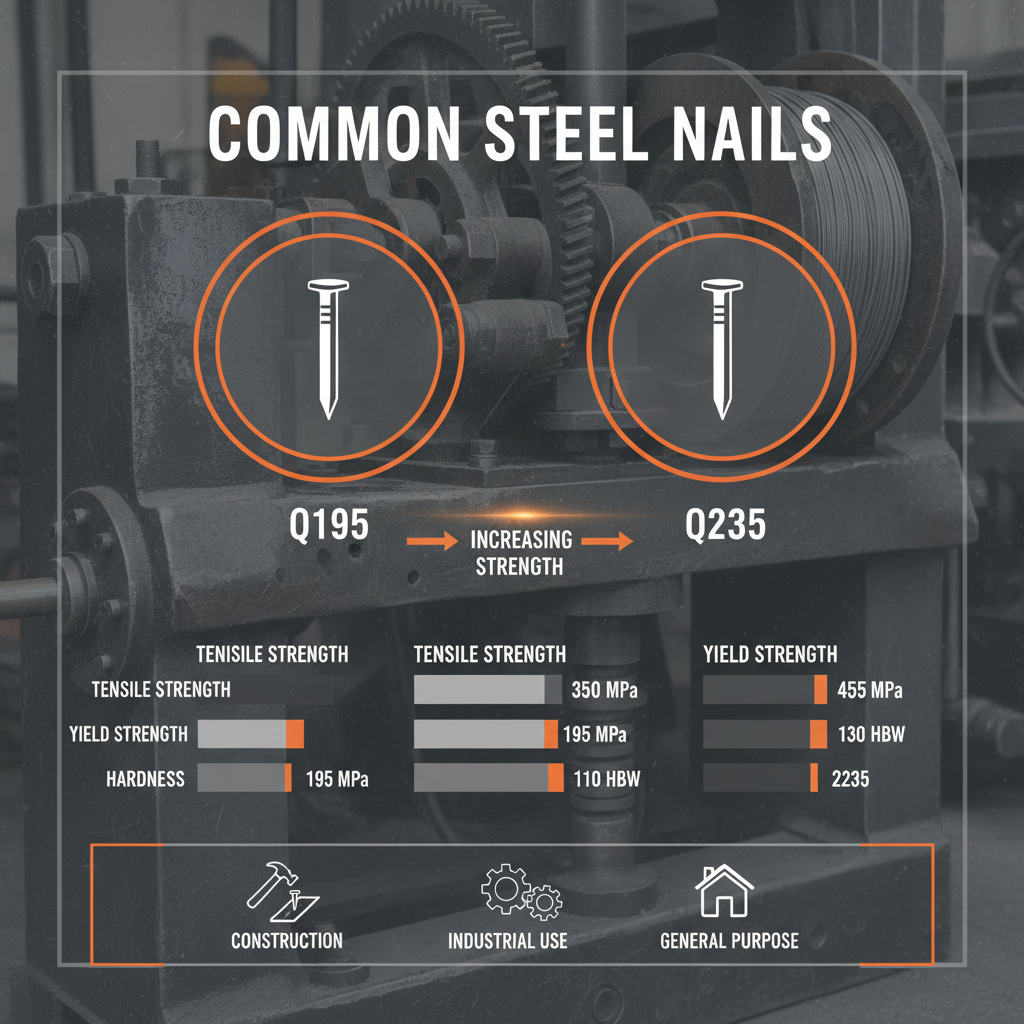
Applications of Q235 Common Nails – When Strength Matters
Q235 common nails are the preferred choice for applications demanding higher strength and durability. This includes framing walls, building decks, constructing fences, and any structural application where the nails will bear significant weight or be exposed to stress. They are particularly well-suited for use with harder wood types like oak, maple, and Douglas fir. The increased tensile strength of Q235 nails ensures a more secure and long-lasting connection, reducing the risk of nail failure and structural compromise. Investing in Q235 nails for critical structural elements provides peace of mind and enhances the overall safety and stability of your project.
Choosing the Right Nail: Factors to Consider
Selecting between Q195 and Q235 common nails requires careful consideration of several factors. First, assess the wood type you'll be working with. For softwoods, Q195 nails may suffice, but for hardwoods, Q235 provides superior holding power. Secondly, evaluate the structural demands of the project. If the nails will bear significant weight or be subject to stress, Q235 is the safer option. Finally, consider your budget. While Q235 nails are slightly more expensive, the added durability and peace of mind they provide often justify the cost.
Conclusion: Selecting the Optimal Nail for Your Project
Ultimately, the best choice between Q195 and Q235 common nails depends on the specific requirements of your project. Understanding their differences in strength, application, and cost empowers you to make an informed decision. For robust construction and lasting durability, Q235 nails are generally recommended, while Q195 nails remain suitable for lighter-duty tasks. Explore the full range of common nails at Fivestar Metals to find the perfect fit for your needs.
Frequently Asked Questions (FAQs)
What is the difference in cost between Q195 and Q235 common nails?
Generally, Q235 common nails are slightly more expensive than Q195 nails due to the higher steel content and increased manufacturing demands associated with achieving the higher tensile strength. However, the price difference is usually minimal, and the added strength and durability of Q235 nails often outweigh the slightly higher cost, especially for critical structural applications. The price varies based on quantity, supplier, and location.
Can Q195 nails be used for outdoor projects?
While Q195 nails can be used for some outdoor projects, it’s generally not recommended for applications exposed to harsh weather conditions or significant moisture. The lower carbon content of Q195 steel makes it more susceptible to corrosion. For outdoor use, consider using galvanized or stainless steel nails, or opting for Q235 nails with a protective coating. Q235, even without coating, provides slightly more corrosion resistance compared to Q195.
Are Q235 nails suitable for use with a nail gun?
Yes, Q235 common nails are generally suitable for use with pneumatic nail guns, provided the nail gun is properly calibrated for the nail size and type. It's crucial to use nails specifically designed for nail guns, as standard common nails may not feed correctly or could damage the gun. Always consult the nail gun's manufacturer’s guidelines to ensure compatibility.
Where can I purchase high-quality Q195 and Q235 common nails?
You can purchase high-quality Q195 and Q235 common nails from reputable metal suppliers and building material retailers. Fivestar Metals offers a wide selection of both grades, ensuring reliable performance and competitive pricing. Always verify the steel grade and quality certifications before making a purchase.


-
Canton Fair 2026-4 in Guangzhou,China
NewsApr.24,2027
-
High Quality Common Nails 1212 for Construction Projects
NewsApr.16,2026
-
The 139th Canton Fair
NewsApr.14,2026
-
Guide to Using Galvanised Common Round Nails for Durable Construction
NewsApr.09,2026
-
Comprehensive Guide to Flat Head Common Nails for Construction Projects
NewsApr.07,2026
-
Understanding the Versatility of the Common Nail 5 5 for Various Applications
NewsApr.04,2026