Comprehensive Guide to D10 and D16 Common Nails for Construction Projects
Understanding D10 and D16 Common Nails for Construction and Beyond
When undertaking any construction or woodworking project, selecting the right fastener is crucial. Among the most common and versatile options are D10 and D16 common nails. These nails serve as fundamental building blocks in numerous applications, from framing and sheathing to general repairs. This article will delve into the characteristics, uses, and differences between D10 and D16 common nails, providing valuable insights for professionals and DIY enthusiasts alike. Ensuring you use the correct nail size and type can significantly impact the structural integrity and longevity of your project.
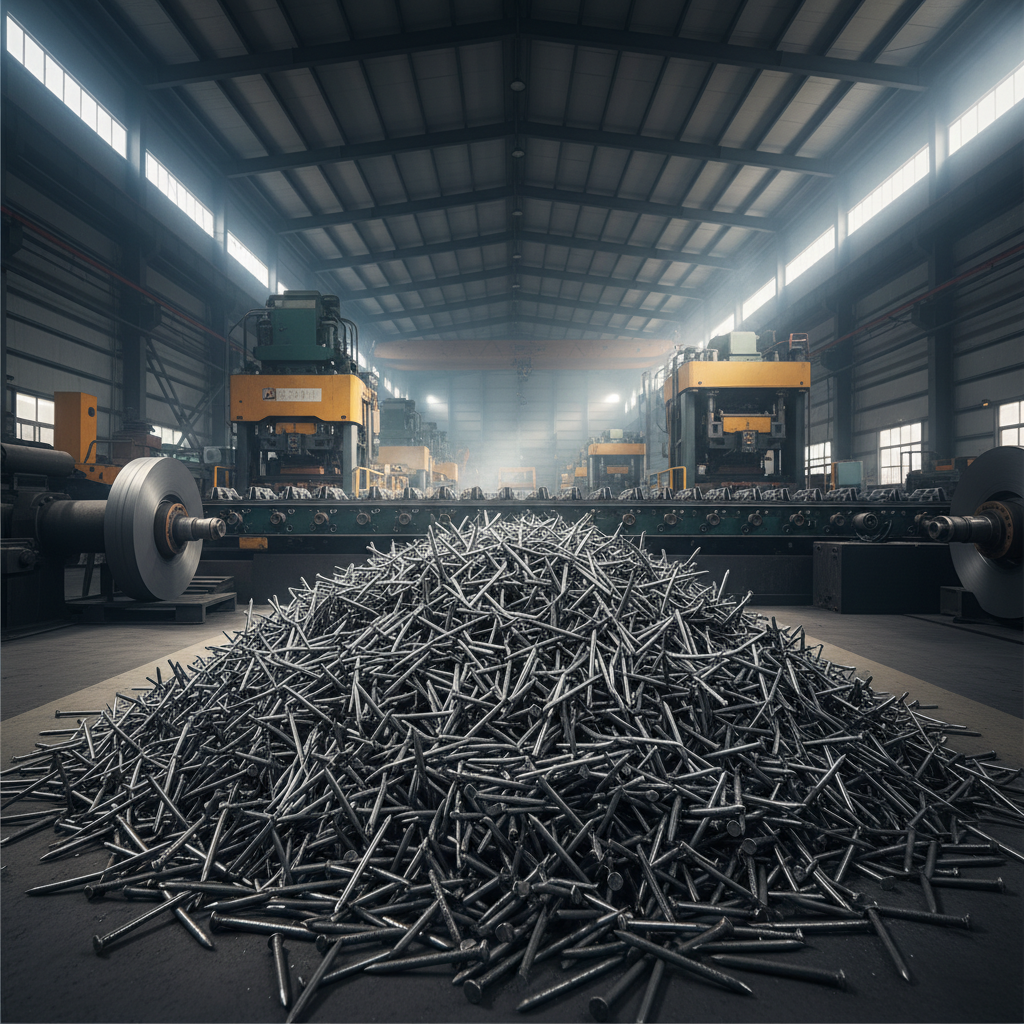
What are Common Nails? A Basic Overview
Common nails are defined by their thick shank, broad head, and diamond point. This design offers excellent holding power, making them ideal for general construction purposes. They’re typically made of steel, and can be galvanized for corrosion resistance. The “D” designation in D10 and D16 refers to the nail's diameter, expressed in hundredths of an inch. These nails are often used in framing, sheathing, fencing, and other structural applications where strong, reliable connections are needed. Their simplicity and affordability make them a staple in most toolboxes.
Key Characteristics: Thick shank for high holding power, broad head to prevent pull-through, diamond point for easy starting. Typically made of steel with galvanized options.
D10 vs. D16 Common Nails: Understanding the Differences
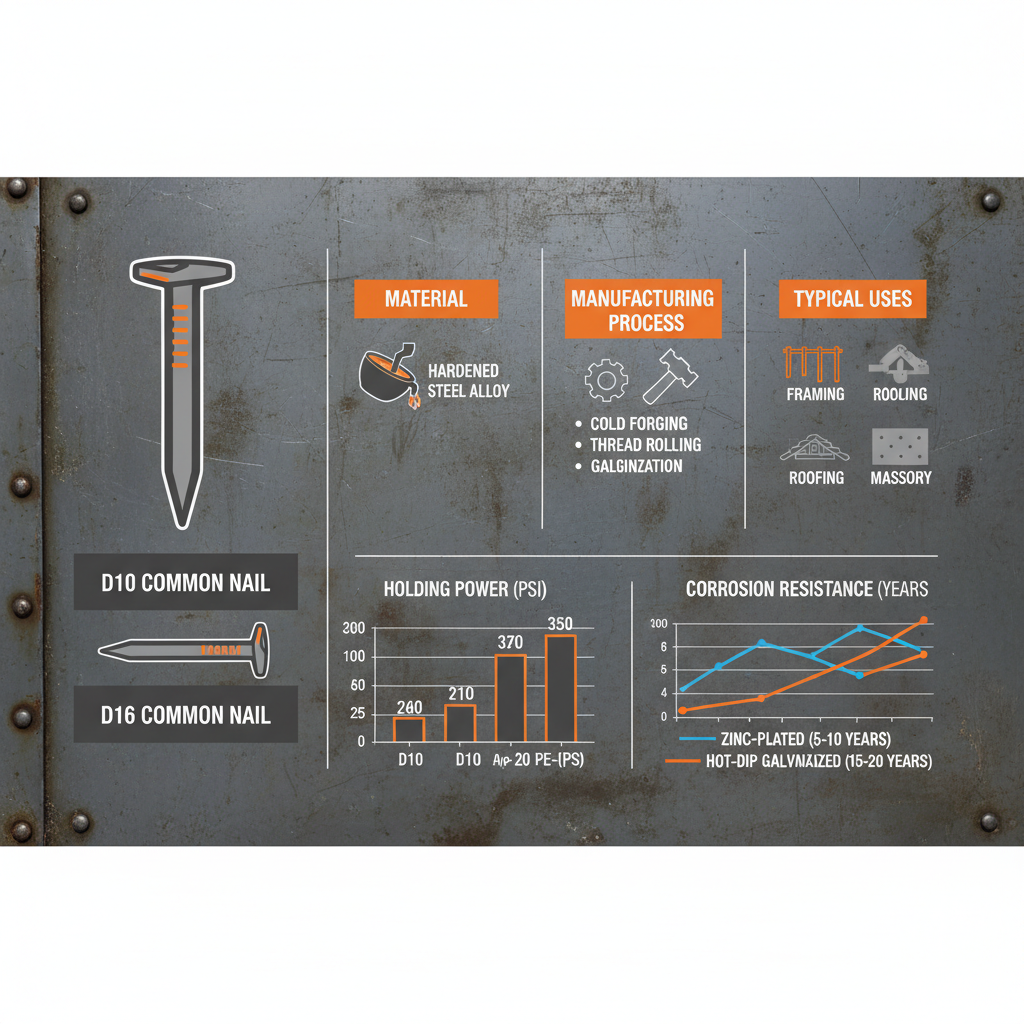
The primary difference between D10 and D16 common nails lies in their diameter and, consequently, their holding power. A D10 nail has a diameter of 0.10 inches, while a D16 nail is thicker at 0.16 inches. This may seem like a small difference, but it translates to a significant increase in strength and resistance to withdrawal. D10 nails are typically used for lighter-duty applications, while D16 nails are preferred for more substantial structural connections. Choosing the correct size is key to ensuring your project's safety and durability.
Key Differences:
• D10 Nail: 0.10 inch diameter, lighter-duty applications.
• D16 Nail: 0.16 inch diameter, heavier-duty applications, greater holding power.
Typical Applications of D10 and D16 Nails
D10 common nails are commonly used for tasks like installing trim, attaching siding, and general repairs. Their smaller diameter makes them less likely to split delicate wood. D16 nails, on the other hand, are preferred for framing walls, building fences, constructing decks, and sheathing roofs. Their increased thickness provides the strength needed to withstand greater stress and loads. Selecting the right nail for the application will ensure a secure and lasting construction.
Galvanized vs. Non-Galvanized: Choosing for Durability
Both D10 and D16 common nails are available in galvanized and non-galvanized finishes. Galvanization is a process that coats the steel with zinc, providing excellent corrosion resistance. For outdoor projects or applications where the nails will be exposed to moisture, galvanized nails are highly recommended. They prevent rust and extend the lifespan of your construction. Non-galvanized nails are suitable for indoor projects where moisture isn't a concern. Five Star Metals provides both options to suit your specific needs.
Sourcing Quality D10 and D16 Common Nails
Choosing a reputable supplier is essential to ensure you receive high-quality nails that meet industry standards. Five Star Metals is a trusted provider of steel products, including a comprehensive range of common nails. We offer competitive pricing, reliable delivery, and expert advice to help you select the right nails for your project. Don’t compromise on quality – invest in nails from a dependable source.
Conclusion: Selecting the Right Nail for the Job
Understanding the differences between D10 and D16 common nails, as well as the benefits of galvanization, is crucial for any construction project. By carefully considering the application and wood thickness, you can ensure a strong, durable, and long-lasting result. Five Star Metals provides the quality nails and expertise you need to succeed.
Frequently Asked Questions (FAQs)
What is the typical length range for D10 and D16 common nails?
D10 and D16 common nails are typically available in lengths ranging from 2 inches to 3.5 inches. The appropriate length depends on the thickness of the materials being joined. A general rule of thumb is that at least half of the nail’s length should penetrate the bottom piece of wood for a secure hold. For example, when joining two pieces of 2-inch thick wood, a 3-inch nail would be a good choice. It’s crucial to choose a length that provides sufficient penetration without protruding through the back of the wood.
Can D10 nails be used for framing if D16 are unavailable?
While D10 nails can be used in a pinch for some framing applications, it’s generally not recommended. D16 nails offer significantly greater holding power and shear strength, which are essential for structural integrity. Using D10 nails for framing can compromise the stability and safety of the structure. It's always best to use the appropriate nail size for the intended application. If D16 nails are unavailable, consider alternative fasteners designed for framing, such as framing nails or structural screws.
How do I determine if a galvanized nail is necessary?
If your project will be exposed to moisture, such as outdoor construction, landscaping, or marine environments, galvanized nails are essential. The zinc coating protects the steel from rust and corrosion, ensuring the nails maintain their strength and prevent staining. Even in partially exposed applications, like decks or fences, galvanized nails are a smart choice. For interior projects in dry conditions, non-galvanized nails are generally sufficient.


-
Canton Fair 2026-4 in Guangzhou,China
NewsApr.24,2027
-
High Quality Common Nails 1212 for Construction Projects
NewsApr.16,2026
-
The 139th Canton Fair
NewsApr.14,2026
-
Guide to Using Galvanised Common Round Nails for Durable Construction
NewsApr.09,2026
-
Comprehensive Guide to Flat Head Common Nails for Construction Projects
NewsApr.07,2026
-
Understanding the Versatility of the Common Nail 5 5 for Various Applications
NewsApr.04,2026